
 |
Case Series
Tandospirone for antidepressant-intolerant persistent postural-perceptual dizziness: A case series based on an otolaryngology–psychiatry collaborative care model
1 Assistant Professor, Department of Otolaryngology– Head and Neck Surgery, Sapporo Medical University, Sapporo, Hokkaido, Japan
2 Assistant Professor, Department of Neuropsychiatry, Sapporo Medical University, Sapporo, Hokkaido, Japan
3 Attending Physician, Department of Otolaryngology–Head and Neck Surgery, Sapporo Medical University, Sapporo, Hokkaido, Japan
4 Professor, Department of Neuropsychiatry, Sapporo Medical University, Sapporo, Hokkaido, Japan
5 Professor, Department of Otolaryngology–Head and Neck Surgery, Sapporo Medical University, Sapporo, Hokkaido, Japan
Address correspondence to:
Sumito Jitsukawa
MD, PhD, Department of Otolaryngology–Head and Neck Surgery, Sapporo Medical University, South 1, West 17, Chuo-ku, Sapporo, Hokkaido 060-8556,
Japan
Message to Corresponding Author
Article ID: 100022Z18SJ2026
Access full text article on other devices

Access PDF of article on other devices


How to cite this article
Jitsukawa S, Kashiwagi T, Iwakiri A, Kawanishi C, Takano K. Tandospirone for antidepressant-intolerant persistent postural-perceptual dizziness: A case series based on an otolaryngology–psychiatry collaborative care model. J Case Rep Images Otolaryngol 2026;5(2):5–10.ABSTRACT
Introduction: Persistent postural-perceptual dizziness is typically managed with serotonergic antidepressants; however, treatment continuation is frequently hindered by adverse effects. Pharmacological alternatives for patients with antidepressant intolerance remain poorly defined. Here, we present a case series examining the potential therapeutic utility of tandospirone, a partial agonist of the 5-hydroxytryptamine 1A receptor, in this clinical context.
Case Series: Three female patients (aged 64–80 years) diagnosed with persistent postural-perceptual dizziness in accordance with the Bárány Society criteria experienced persistent dizziness and were unable to tolerate antidepressant therapy because of grade 2 adverse events, including gastrointestinal disturbances. Tandospirone was introduced as an alternative treatment and was titrated based on individual tolerability. All patients exhibited meaningful clinical improvement, characterized by reductions in Niigata persistent postural-perceptual dizziness Questionnaire scores and stabilization of posturographic parameters. Symptomatic relief was maintained for up to 12 months without any notable adverse effects.
Conclusion: Tandospirone may be a clinically valuable alternative for patients with antidepressant-intolerant persistent postural-perceptual dizziness. Although the contributions of spontaneous remission and vestibular rehabilitation cannot be excluded entirely, the extended duration of symptoms preceding tandospirone initiation renders natural recovery less probable. Prospective investigations are warranted to further elucidate its efficacy and safety profile.
Keywords: Antidepressant intolerance, Collaborative care, Persistent postural-perceptual dizziness, Tandospirone
Introduction
Persistent postural-perceptual dizziness (PPPD) is predominantly managed using pharmacotherapy centered on selective serotonin reuptake inhibitors (SSRIs) [1]. Nevertheless, adverse effects that emerge during treatment initiation may preclude therapeutic continuation in a subset of patients [2]. Pharmacological alternatives for individuals intolerant to antidepressants remain poorly characterized. Herein, we present a case series of patients with PPPD who were unable to maintain antidepressant therapy because of adverse effects and subsequently demonstrated symptomatic improvement following the administration of tandospirone, a partial agonist of the 5-hydroxytryptamine (5-HT)1A receptor.
CASE SERIES
This study was approved by the Institutional Review Board of Sapporo Medical University (Approval No. 362-195) and was conducted using an opt-out consent procedure, in accordance with the ethical principles of the Declaration of Helsinki.
Case 1
A 74-year-old woman developed benign paroxysmal positional vertigo 12 months before presentation. Although the patient’s rotational vertigo improved following canalith repositioning maneuvers, she continued to experience a sensation of floating dizziness almost daily. The patient’s Short Form-8 Health Survey (SF-8) score was 17, indicating a markedly impaired quality of life. The patient was diagnosed with PPPD in accordance with the Bárány Society criteria, and pharmacotherapy was initiated along with vestibular rehabilitation.
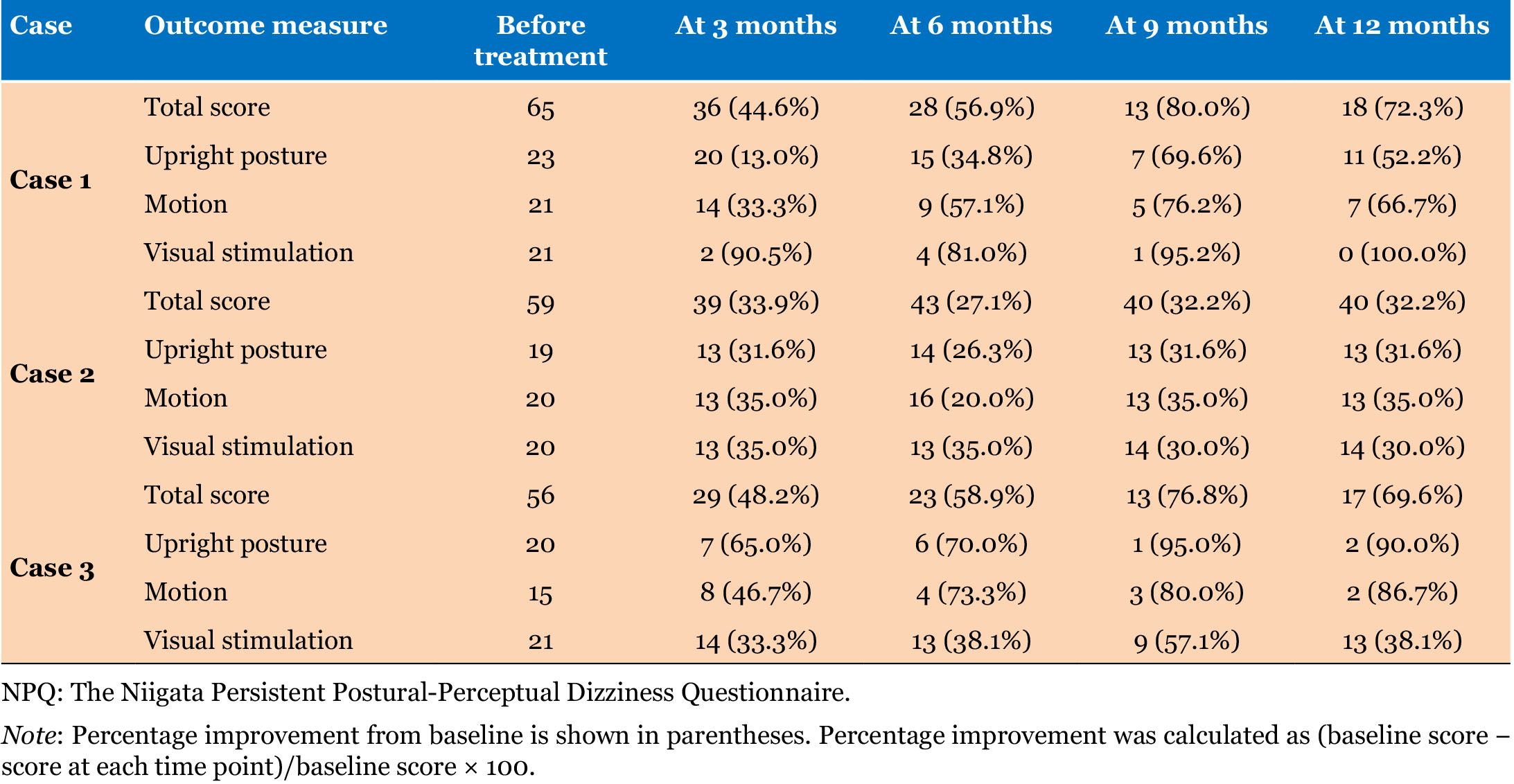
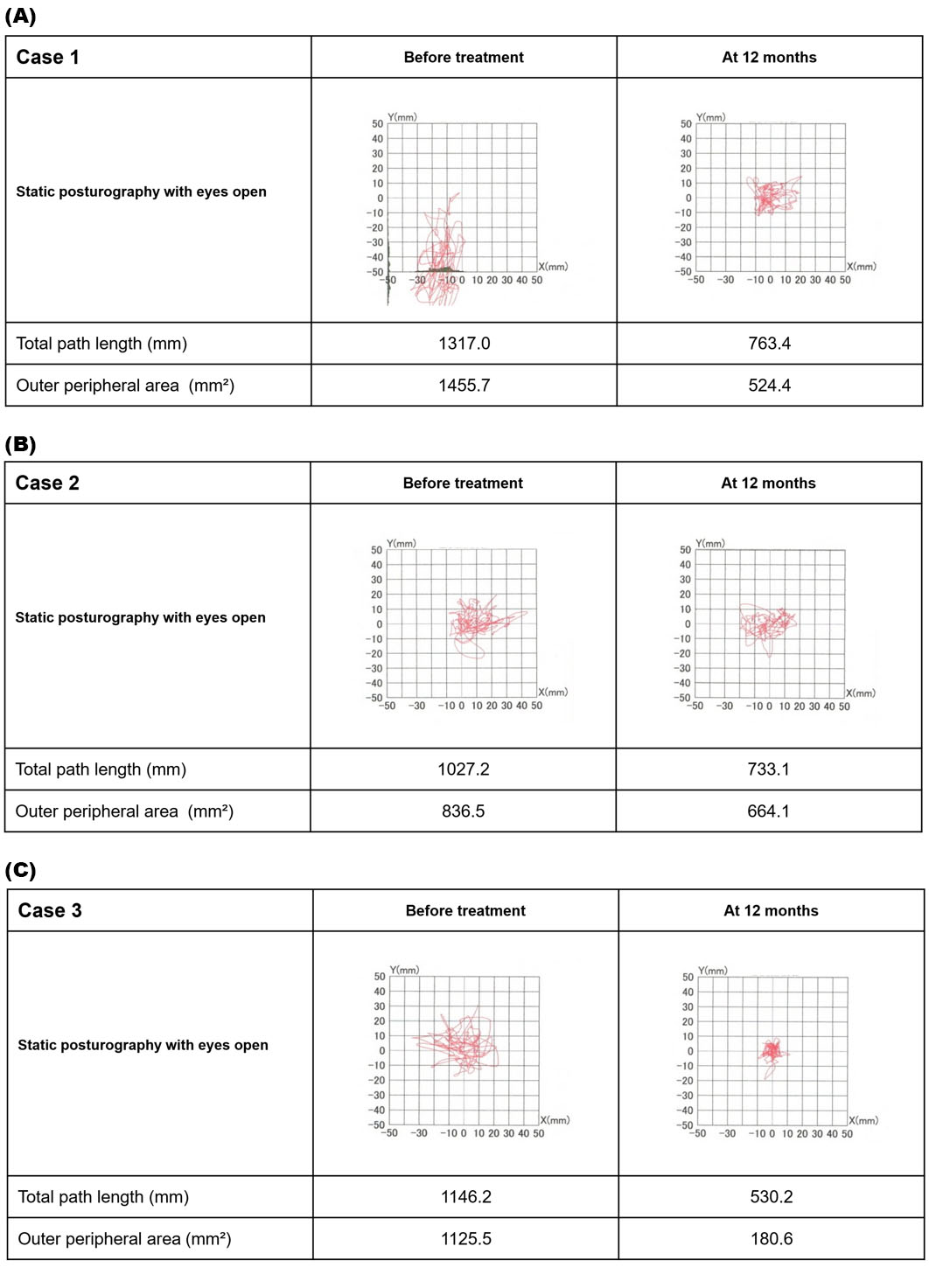
Initial treatment with a SSRI, escitalopram, was initiated at half the standard dose (5 mg). However, two days after initiation, the patient developed grade 2 diarrhea, as defined by the Common Terminology Criteria for Adverse Events version 5.0. Despite the administration of intestinal regulators, the medication was discontinued owing to poor tolerability, and tandospirone was introduced at 10 mg/day as an alternative therapy. No gastrointestinal symptoms were observed, and the dose was titrated to 30 mg/day after four weeks. Two months after treatment initiation, low-dose sertraline (12.5 mg) was reintroduced; however, grade 2 diarrhea recurred, necessitating discontinuation. Subsequently, the patient was maintained on tandospirone monotherapy. Clinical improvement in dizziness was observed three months after treatment initiation, and reductions in the Niigata PPPD Questionnaire (NPQ) score, together with stabilization of posturographic parameters, were sustained at the 12-month follow-up (Table 1, Figure 1A). At the 12-month follow-up, the patient remained on tandospirone monotherapy with sustained improvement in dizziness symptoms. The final diagnosis remained PPPD.
Case 2
An 80-year-old woman developed benign paroxysmal positional vertigo 17 months before presentation. As in Case 1, this patient’s rotational vertigo improved following the canalith repositioning maneuvers; however, she continued to experience a sensation of floating dizziness almost daily. The patient’s SF-8 score was 34, indicating a diminished quality of life. The patient was diagnosed with PPPD in accordance with the Bárány Society criteria, and pharmacotherapy was initiated along with vestibular rehabilitation.
Treatment with the SSRI escitalopram was initiated at 5 mg; however, grade 2 nausea developed the following day, rendering continuation difficult. Therefore, the medication was changed to tandospirone at 10 mg/day. Although the dose was increased to 15 mg/day after two weeks, it was subsequently reduced to 10 mg/day because of the development of nausea, headache, and insomnia. Five months after treatment initiation, low-dose vortioxetine (5 mg), a multimodal serotonergic antidepressant, was administered; however, grade 2 diarrhea developed, necessitating its discontinuation. Subsequently, the patient was managed with tandospirone monotherapy at 10 mg/day, which resulted in a reduction in the NPQ score and stabilization of posturographic parameters. These therapeutic benefits were sustained at the 12-month follow-up (Table 1, Figure 1B). At the 12-month follow-up, the patient remained on tandospirone monotherapy at 10 mg/day with sustained improvement in dizziness symptoms. The final diagnosis remained PPPD.
Case 3
A 64-year-old woman was treated for Ménière’s disease at a local otolaryngology clinic. Approximately four months prior to presentation, the patient developed a persistent floating sensation that differed from her typical Ménière’s attacks and occurred almost daily. The patient’s SF-8 score was 37, indicating a diminished quality of life. The patient was diagnosed with PPPD in accordance with the Bárány Society criteria, and pharmacotherapy was initiated along with vestibular rehabilitation.
Treatment with vortioxetine was initiated at a dose of 5 mg; however, akathisia-like restlessness developed two days later, making continuation difficult. Therefore, the medication was changed to tandospirone at 15 mg/day. No apparent adverse effects were observed, allowing the treatment to be maintained, and the dosage was subsequently increased to 30 mg/day after four weeks. Five months after treatment initiation, a very low dose of escitalopram (2 mg) was administered; however, exacerbation of dizziness was noted, leading to its discontinuation. Subsequently, the patient was administered tandospirone monotherapy at 30 mg/day. Reductions in the NPQ score and stabilization of posturographic parameters were observed, and these therapeutic benefits were sustained at the 12-month follow-up (Table 1, Figure 1C). At the 12-month follow-up, the patient remained on tandospirone monotherapy at 30 mg/day with sustained improvement in dizziness symptoms and no serious adverse events. The diagnosis of PPPD remained unchanged.
Discussion
In the management of PPPD, the efficacy of antidepressants, particularly SSRIs, in combination with vestibular rehabilitation or cognitive behavioral therapy has been documented, and these agents are presently regarded as the cornerstone of pharmacological treatments [1]. Nevertheless, adverse effects associated with antidepressant therapy are relatively common; approximately 60% of patients experience some form of adverse event, and the treatment continuation rate has been reported to be approximately 70% [2]. Therefore, antidepressant tolerability represents a significant clinical challenge in the management of PPPD.
In this case series, all three patients who fulfilled the Bárány Society diagnostic criteria for PPPD developed grade 2 adverse events, including gastrointestinal disturbances and akathisia-like restlessness, shortly after the initiation of antidepressant therapy, thereby precluding continued use. Despite the implementation of recommended strategies to mitigate adverse effects, such as comprehensive patient education, low-dose initiation, gradual titration, and symptomatic management [3], continued antidepressant therapy remained impracticable. Therefore, these patients were classified as antidepressant-intolerant.
Persistent postural-perceptual dizziness is associated with significantly lower physical health-related quality of life than other vestibular disorders [4]. Consistent with the reduced SF-8 scores observed in our cohort, the persistent daily dizziness experienced by patients with PPPD may substantially compromise quality of life and increase patients’ reluctance to continue treatment when adverse effects arise. Under such circumstances, patients may be reluctant to switch to another antidepressant within the same class, which can occasionally result in treatment discontinuation. Therefore, the pharmacological management of PPPD should account not only for therapeutic efficacy, but also for tolerability and patient acceptability.
Tandospirone is a partial agonist of the 5-HT1A receptor. In the present cases, continued antidepressant therapy was difficult because of adverse effects, and tandospirone was therefore considered as an alternative agent with a potentially more favorable tolerability profile. Previous studies have suggested that tandospirone may improve both gastrointestinal and anxiety symptoms in patients with functional dyspepsia [5], may have therapeutic effects comparable to those of sertraline in social anxiety disorder [6], and may also be useful as an adjunctive treatment for depression [7]. In addition, tandospirone has been regarded as a relatively safe therapeutic option because of its low sedative properties, minimal potential for dependence, and negligible anticholinergic effects [8]. These characteristics were considered potentially advantageous in the present patients with PPPD who were intolerant to antidepressants.
After switching to tandospirone, favorable tolerability was observed in all patients, together with improvements in NPQ scores and posturographic parameters during monotherapy. To the best of our knowledge, this is the first report describing the potential utility of tandospirone in patients with PPPD who are intolerant to antidepressants. Although anxiolytics are generally considered adjunctive rather than first-line agents in PPPD [9], the present findings, while requiring cautious interpretation because of the small number of cases, raise the possibility that tandospirone may be a therapeutic option for patients with PPPD in whom SSRI treatment is difficult.
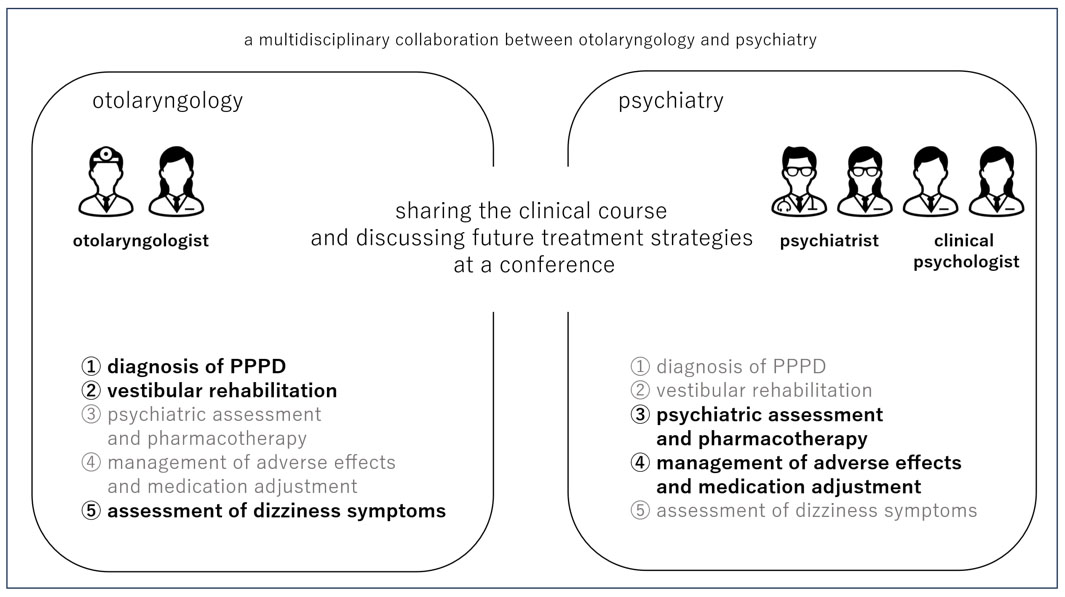
A notable strength of this case series is that the treatment was delivered within a multidisciplinary care framework characterized by close collaboration between otolaryngology and psychiatry. At our institution, patients presenting with chronic dizziness are initially evaluated by otolaryngologists, and vestibular rehabilitation is initiated when appropriate. Individuals diagnosed with PPPD are subsequently referred to the psychiatry department, where pharmacotherapy is overseen by clinicians experienced in its management. Furthermore, assessments of dizziness are continuously shared between the two departments, thereby establishing a well-defined collaborative framework. This integrated model also facilitates the timely introduction of cognitive behavioral therapy when indicated. Reports describing such structured otolaryngology–psychiatry collaborations are scarce. In the present series, this framework enabled flexible reassessment of therapeutic strategies, even in antidepressant-intolerant cases, which may have contributed to improved treatment adherence (Figure 2).
Vestibular rehabilitation may have contributed, at least in part, to the improvement in clinical symptoms by promoting habituation to motion and visual stimuli and by enhancing postural control in daily activities. However, although vestibular rehabilitation is commonly incorporated into the management of PPPD, its efficacy in this population has not been consistently demonstrated, and some reports have suggested that its benefit may be limited [10],[11]. In the present cases, the contribution of vestibular rehabilitation therefore cannot be excluded, but it is unlikely to fully account for the observed improvement in symptoms.
This study has several limitations that warrant consideration. First, the small sample size and observational design necessitate cautious interpretation with respect to generalizability. In addition, the absence of a control group limited our ability to directly compare the observed outcomes with those of untreated patients or patients receiving other therapeutic interventions. Second, the potential influence of the natural course of PPPD could not be fully controlled, precluding the definitive attribution of the therapeutic benefits to tandospirone alone. Persistent postural-perceptual dizziness is known to follow a chronic course that may persist for years despite appropriate management [12], and the prolonged symptom duration preceding tandospirone initiation makes spontaneous remission less likely. In addition, although the effects of vestibular rehabilitation cannot be excluded, some reports have suggested that its efficacy in PPPD may be limited [10],[11]. Third, the variability in medication titration and concomitant treatments limited the uniformity of the intervention. Fourth, because only patients with antidepressant intolerance were included, the possibility of selection bias could not be excluded. Future prospective and comparative investigations involving antidepressant-intolerant PPPD populations are warranted to elucidate the efficacy and safety profile of tandospirone.
Conclusion
In this small case series of three patients with PPPD who were unable to continue antidepressant therapy because of adverse effects, a trend toward improvement in dizziness symptoms was observed after switching to tandospirone monotherapy. Although tandospirone appeared to be relatively well tolerated, the clinical significance of these findings remains uncertain because of the limited sample size. Further studies in larger cohorts are required to clarify the efficacy and safety of tandospirone in this population.
REFERENCES
1.
Staab JP, Eckhardt-Henn A, Horii A, Jacob R, Strupp M, Brandt T, et al. Diagnostic criteria for persistent postural-perceptual dizziness (PPPD): Consensus document of the committee for the Classification of Vestibular Disorders of the Bárány Society. J Vestib Res 2017;27(4):191–208. [CrossRef]
[Pubmed]

2.
Yagi M, Takimoto Y, Kawashima Y, Ishiyama A, Ueno T, Kondo T, et al. Predictors of therapeutic response to serotonergic antidepressants in patients with persistent postural-perceptual dizziness. Front Neurol 2025;16:1566898.
[Pubmed]
3.
Kelly K, Posternak M, Alpert JE. Toward achieving optimal response: Understanding and managing antidepressant side effects. Dialogues Clin Neurosci 2008;10(4):409–18. [CrossRef]
[Pubmed]
4.
Steensnaes MH, Knapstad MK, Goplen FK, Berge JE. Persistent postural-perceptual dizziness (PPPD) and quality of life: A cross-sectional study. Eur Arch Otorhinolaryngol 2023;280(12):5285–92. [CrossRef]
[Pubmed]
5.
Liu L, Yang W, Lu Y, Wang J, Zheng Y, Gu S. Clinical efficacy of tandospirone on functional dyspepsia patients with anxiety: A randomized, placebo-controlled study. Dig Dis Sci 2023;68(2):521–8. [CrossRef]
[Pubmed]
6.
Huang X, Li C, Li WH, Luo YL, Wang B, Zhang W, et al. Clinical evaluation of the efficacy and safety of tandospirone versus sertraline monotherapy for social anxiety disorder: A randomized open-label trial. Hum Psychopharmacol Clin Exp 2013;28(6):594–9. [CrossRef]
[Pubmed]
7.
Lin J, Su Y, Wang C, Yang F, Xu Y, Yuan Y, et al. Effects of tandospirone augmentation in major depressive disorder patients with high anxiety: A multicenter, randomized, parallel-controlled, open-label study. J Psychiatr Res 2018;99:104–10. [CrossRef]
[Pubmed]
8.
Huang X, Yang J, Yang S, Cao S, Qin D, Zhou Y, et al. Role of tandospirone, a 5-HT1A receptor partial agonist, in the treatment of central nervous system disorders and the underlying mechanisms. Oncotarget 2017;8(60):102705–20. [CrossRef]
[Pubmed]
9.
Madrigal J, Herrón-Arango AF, Bedoya MJ, Cordero Chen J, Castillo-Bustamante M. Persistent challenges: A comprehensive review of persistent postural-perceptual dizziness, controversies, and clinical complexities. Cureus 2024;16(5):e60911. [CrossRef]
[Pubmed]
10.
Picciotti PM, Rolesi R, Rossi G, Oliveto G, Galli J. Personalized vestibular rehabilitation in persistent postural–perceptual dizziness (PPPD), unilateral and bilateral vestibular dysfunction: A comparative study. J Pers Med 2026;16(4):214. [CrossRef]
[Pubmed]
11.
Webster KE, Kamo T, Smith L, Harrington-Benton NA, Judd O, Kaski D, et al. Non-pharmacological interventions for persistent postural-perceptual dizziness (PPPD). Cochrane Database Syst Rev 2023;(3):CD015333. [CrossRef]
[Pubmed]
12.
Popkirov S, Staab JP, Stone J. Persistent posturalperceptual dizziness (PPPD): A common, characteristic and treatable cause of chronic dizziness. Pract Neurol 2018;18(1):5–13. [CrossRef]
[Pubmed]
SUPPORTING INFORMATION
Acknowledgments
We would like to thank all staff members of the Department of Otolaryngology–Head and Neck Surgery and Department of Neuropsychiatry at Sapporo Medical University. We would like to thank Editage (www.editage.jp) for English language editing.
Declaration of Generative AI and AI-assisted technologies in the manuscript preparation processWe used ChatGPT (version 5.2, GPT-5.2 model; OpenAI, San Francisco, CA, USA) for English language editing and proofreading of the manuscript. The AI tool was utilized to check grammar, spelling, and stylistic clarity in the main text.
Author ContributionsSumito Jitsukawa - Conception of the work, Design of the work, Acquisition of data, Analysis of data, Drafting the work, Revising the work critically for important intellectual content, Final approval of the version to be published, Agree to be accountable for all aspects of the work in ensuring that questions related to the accuracy or integrity of any part of the work are appropriately investigated and resolved.
Tomonori Kashiwagi - Conception of the work, Design of the work, Acquisition of data, Analysis of data, Drafting the work, Revising the work critically for important intellectual content, Final approval of the version to be published, Agree to be accountable for all aspects of the work in ensuring that questions related to the accuracy or integrity of any part of the work are appropriately investigated and resolved.
Ayaka Iwakiri - Acquisition of data, Revising the work critically for important intellectual content, Final approval of the version to be published, Agree to be accountable for all aspects of the work in ensuring that questions related to the accuracy or integrity of any part of the work are appropriately investigated and resolved.
Chiaki Kawanishi - Revising the work critically for important intellectual content, Final approval of the version to be published, Agree to be accountable for all aspects of the work in ensuring that questions related to the accuracy or integrity of any part of the work are appropriately investigated and resolved.
Kenichi Takano - Revising the work critically for important intellectual content, Final approval of the version to be published, Agree to be accountable for all aspects of the work in ensuring that questions related to the accuracy or integrity of any part of the work are appropriately investigated and resolved.
Guaranter of SubmissionThe corresponding author is the guarantor of submission.
Source of SupportNone
Consent StatementWritten informed consent was obtained from the patient for publication of this article.
Data AvailabilityAll relevant data are within the paper and its Supporting Information files.
Conflict of InterestAuthors declare no conflict of interest.
Copyright© 2026 Sumito Jitsukawa et al. This article is distributed under the terms of Creative Commons Attribution License which permits unrestricted use, distribution and reproduction in any medium provided the original author(s) and original publisher are properly credited. Please see the copyright policy on the journal website for more information.


